

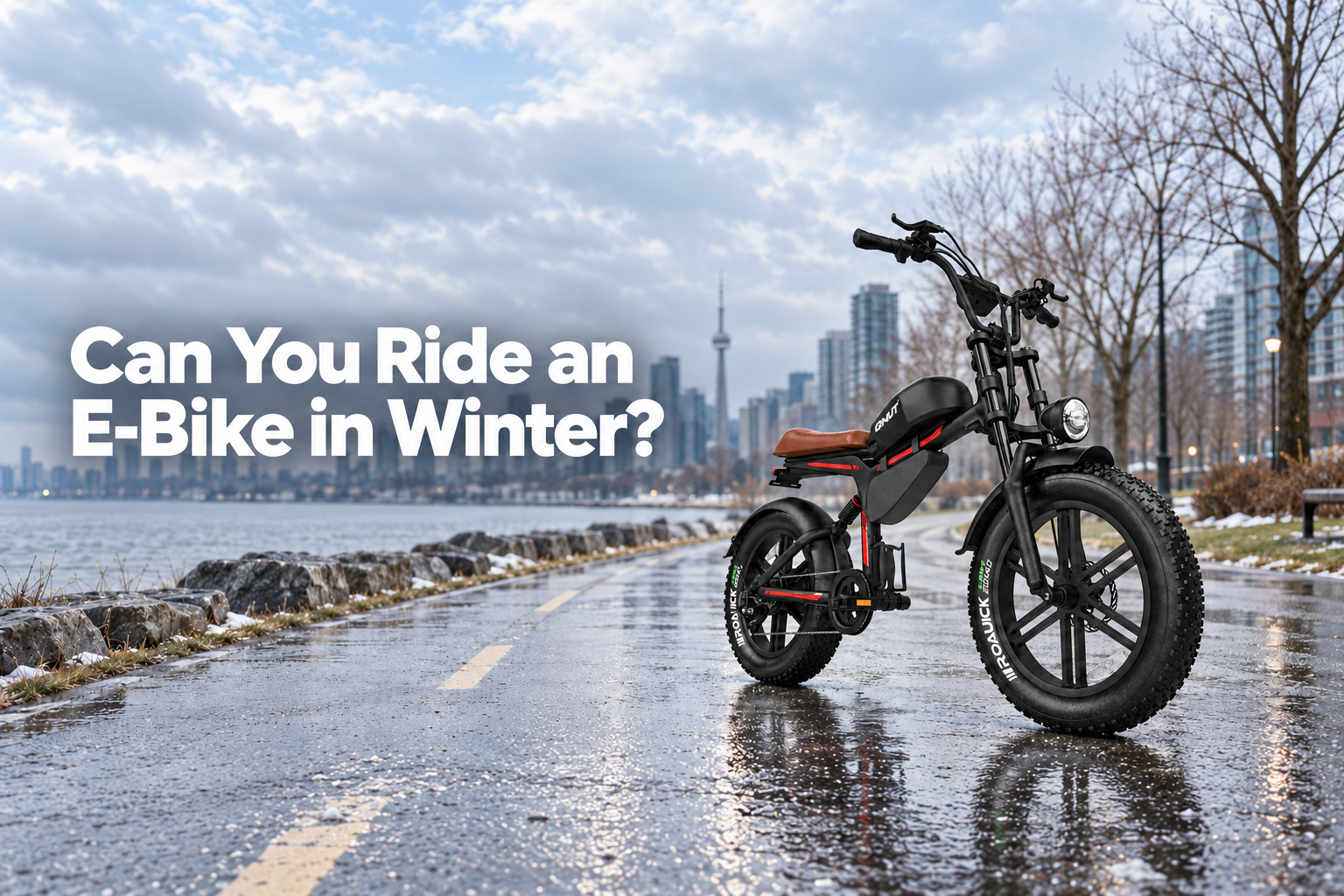
Cold weather does not necessarily mean your e-bike has to stay indoors. Many riders continue commuting, running errands, and enjoying shorter recreational rides throughout the winter.
However, lower temperatures, wet roads, shorter daylight hours, and changing surface conditions can affect how an e-bike performs. Your battery may deliver less range, tire pressure may drop, and braking may feel different on wet or slippery surfaces.
With a few adjustments to your preparation, riding style, and battery care, you can continue using your e-bike more confidently during colder months.
How Cold Weather Affects an E-Bike
Cold temperatures mainly affect the battery, tires, and road conditions.
Lithium-ion batteries may temporarily provide less usable capacity in low temperatures. This does not always mean something is wrong with the battery, but it can reduce the distance available on a charge.
Cold air can also lower tire pressure. Underinflated tires increase rolling resistance and may make steering feel less predictable. Meanwhile, rain, wet leaves, mud, road salt, and occasional ice can reduce traction.
Because conditions can change quickly, winter rides should usually be planned more conservatively than similar trips in warm, dry weather.
Check Your E-Bike Before Leaving
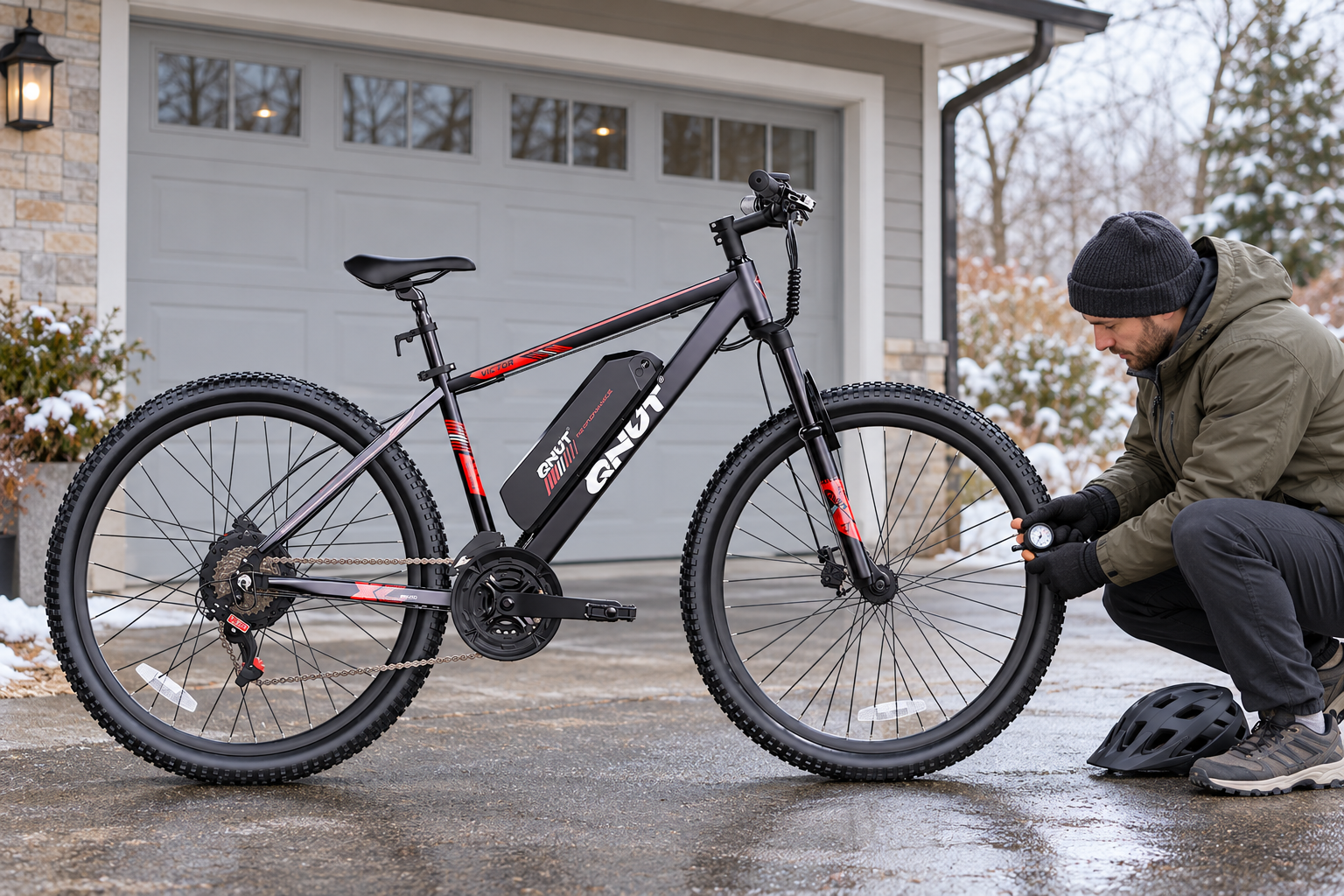
A quick inspection can prevent small problems from becoming more serious during a cold ride.
Check the tire pressure using the recommended range printed on the tire or listed in the bike manual. Inspect the tread for excessive wear, cuts, or embedded debris. Test both brakes and make sure they respond smoothly.
Winter also brings shorter days and lower visibility. Confirm that the headlight and rear light are working before leaving, even if you expect to return before dark.
Plan a familiar route when possible and consider making it shorter than your usual warm-weather ride. Your return trip may require more battery than expected if the temperature drops, the wind becomes stronger, or the road surface creates additional resistance.
Ride Smoothly on Wet Roads
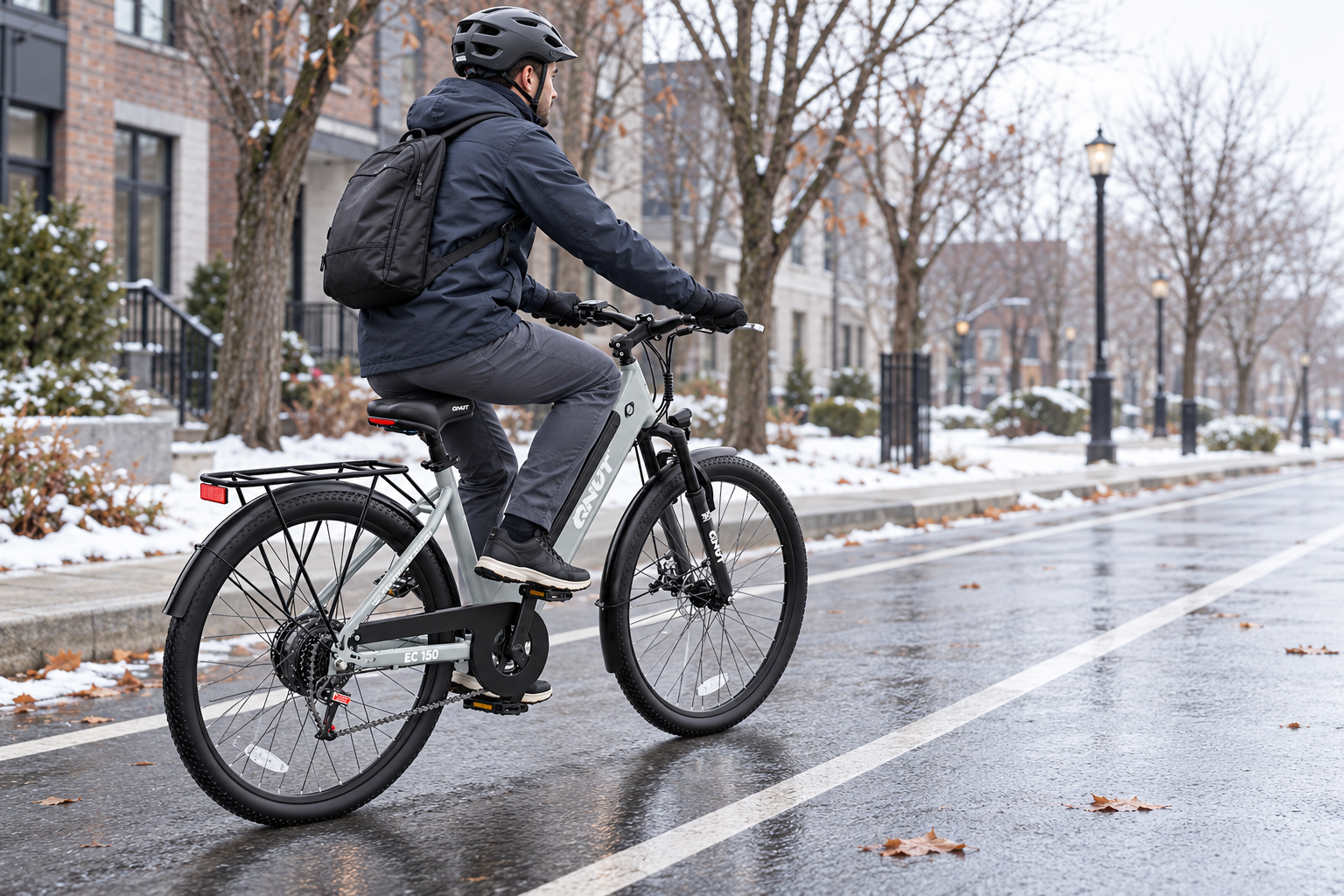
Smooth control is more important than speed on cold and wet roads.
Use a lower assistance level when starting on a slippery surface. Apply power gradually and avoid sudden throttle input, sharp turns, or hard braking. Begin slowing down earlier and leave more distance between your e-bike and other road users.
Wet leaves can be especially slippery, while puddles may hide potholes or debris. Avoid deep water and do not assume that a wet road offers the same grip as dry pavement.
If you notice widespread ice, freezing rain, poor visibility, or a surface that makes controlled steering and braking difficult, postponing the ride is the safer decision.
Plan for Less Battery Range
An e-bike’s published range is normally based on specific test conditions. Actual winter range may be affected by temperature, rider weight, hills, wind, tire pressure, assistance level, and the number of stops along the route.
Start with a properly charged battery and leave more reserve power than you would during summer. Avoid planning a winter journey around the maximum published range.
After returning from a cold ride, do not immediately charge a battery that is still very cold. Bring it into a dry, temperature-controlled space and allow it to warm naturally. Check that the battery, charging port, and surrounding connectors are dry before connecting the original charger.
Do not use a heater, hair dryer, hot water, or another direct heat source to warm the battery. Always follow the charging and temperature guidance provided in the manual for your specific model.
Clean and Store the Bike After a Wet Ride
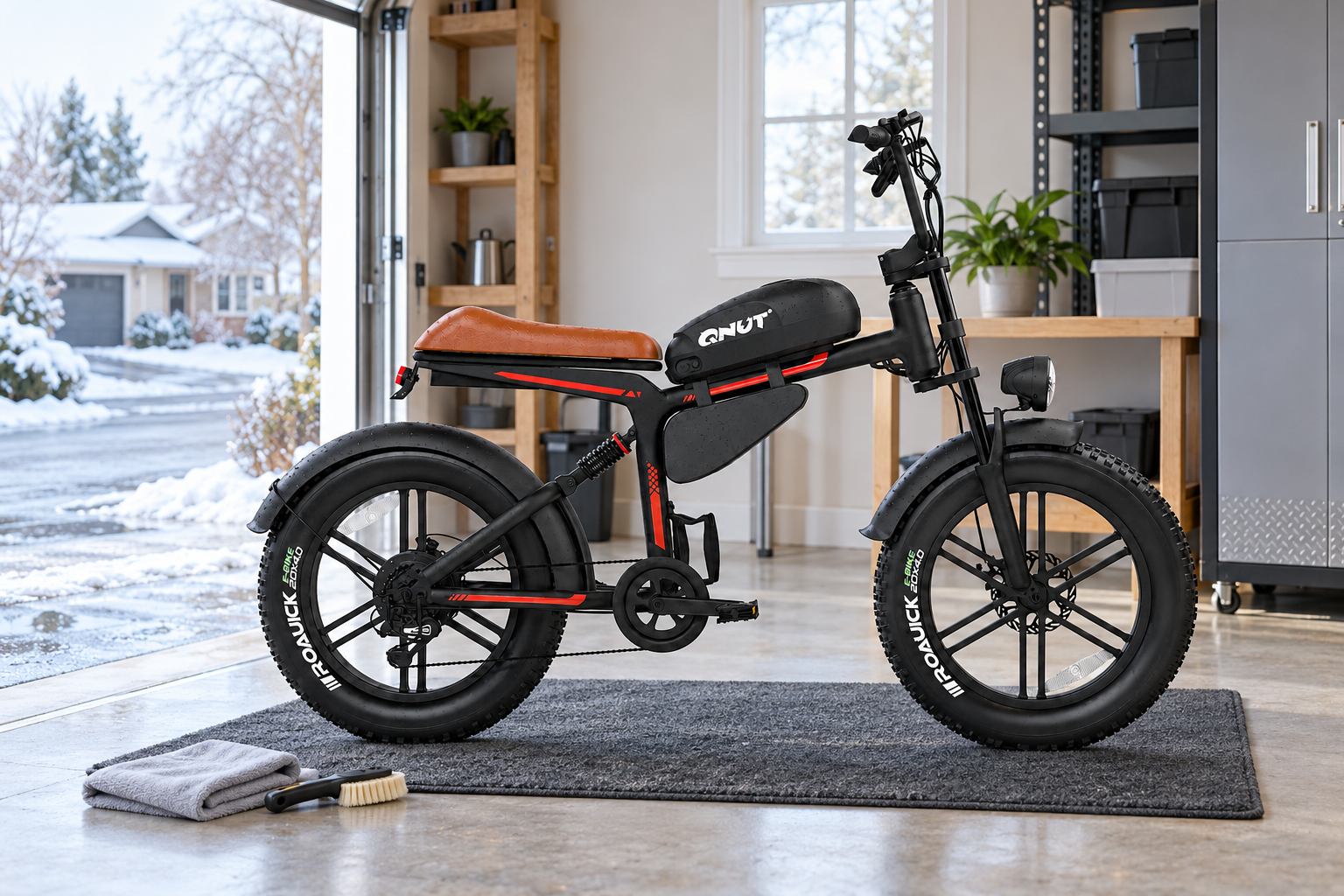
Moisture, mud, grit, and road salt can accelerate wear if they remain on the bike.
After a wet ride, wipe down the frame, wheels, drivetrain, and accessible components. Avoid using high-pressure water around electrical parts, bearings, or connectors. Dry the bike thoroughly before storing it.
Check the chain and clean or lubricate it when necessary, keeping lubricant away from brake pads and rotors.
Store the e-bike in a dry, sheltered location. If you will not ride for an extended period, follow the model’s battery storage instructions rather than leaving the battery empty or continuously connected to the charger.
Choosing a QNUT E-Bike for Your Winter Routine
Different winter routes call for different types of e-bikes.
The QNUT BK20 features 20 × 4.0-inch fat tires, a 48V 18Ah battery, and front and rear lighting. Its larger battery capacity provides useful range flexibility for riders who want more reserve power during colder journeys. Its wide tires can also provide a stable footprint on suitable loose or uneven surfaces, although they do not remove the risks of ice or replace compatible winter tires.
For shorter daily rides, the QNUT Victor 3.0 combines 26-inch mountain bike tires with a removable 36V 10.4Ah battery.
The QNUT EC150 uses a 48V 10.4Ah battery and is designed around everyday city riding and commuting.
Whichever model you choose, match the bike to your normal route and riding distance rather than expecting one setup to handle every winter condition.
Final Thoughts
You can continue riding an e-bike in winter when road and weather conditions remain manageable. Check the bike before leaving, ride smoothly, allow extra battery reserve, and clean it after wet trips.
A little preparation can make cold-weather riding safer, more predictable, and easier to enjoy.